Choosing The Right Yoghurt

Yoghurt, as a regular staple in your diet, can help increase your intake of protein, calcium, magnesium, phosphate, potassium and B12. A lot of the time it’s an easy snack or base to your breakfast. But how do we go about choosing the right yoghurt?
This is a common question we get EVERY week from a lot of patients seeing us for a range of issues. And, we’re not gonna lie, it can be confusing. Everyone has different goals. Maybe, you’ve been told to increase your protein? Perhaps you need to increase your calcium? Limit your saturated fat? Improve your gut health? Whatever the reason, there is a yoghurt perfectly suited to your needs.
To help, we recently reviewed 19 different vanilla yoghurts available on the market to see what options might suit different people best.
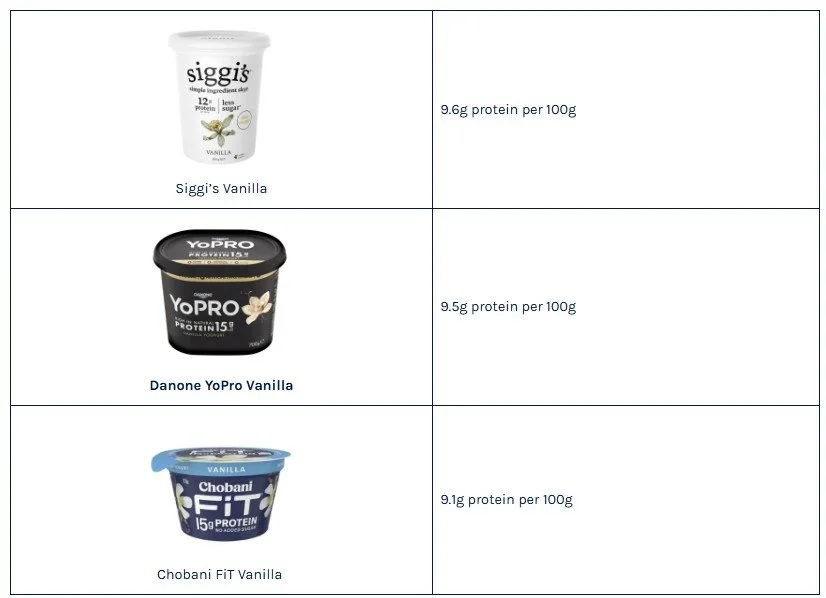
PROTEIN (HIGHEST)
Which yoghurts are the highest in protein? Here are the top 3 from our supermarket review…
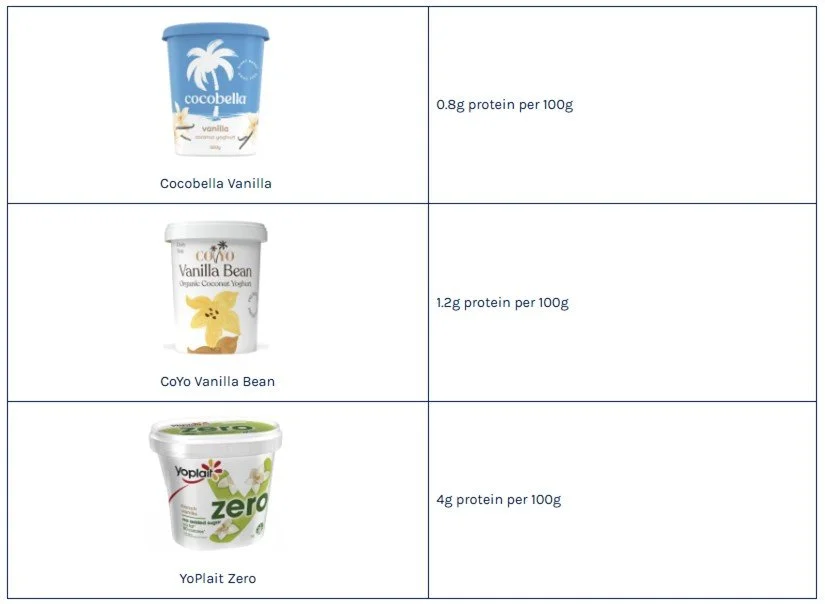
PROTEIN (LOWEST)
Which yoghurts are the lowest in protein? Here are the top 3 from our supermarket review…
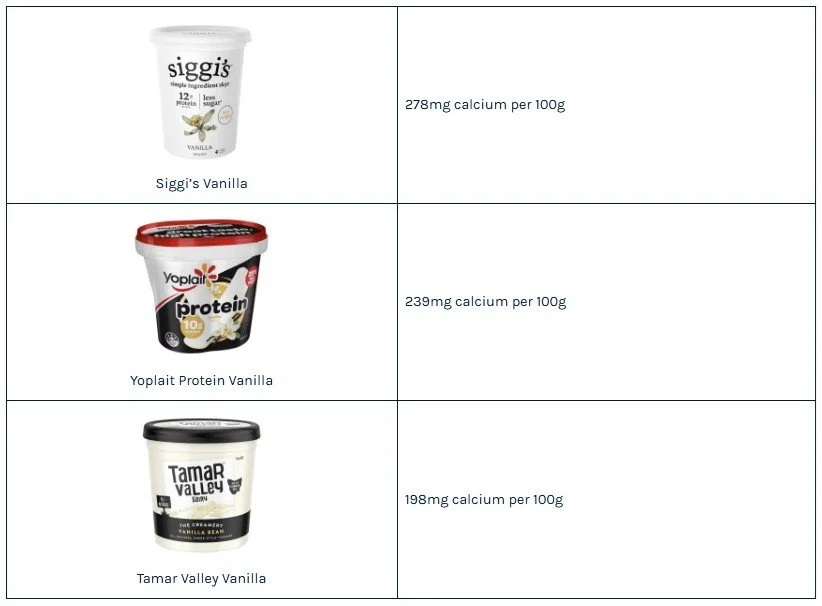
CALCIUM (HIGHEST)
Which yoghurts are the highest in calcium? Here are the top 3 from our supermarket review…
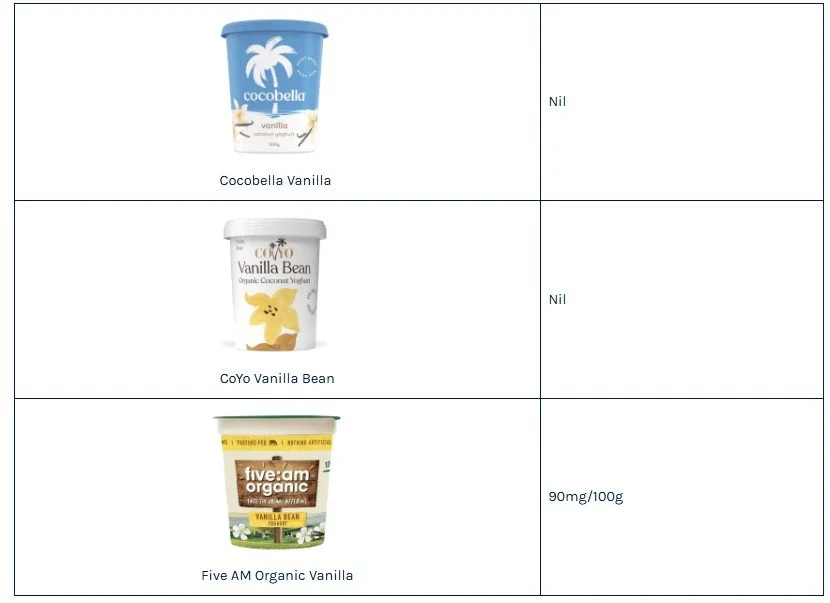
CALCIUM (LOWEST)
Which yoghurts are the lowest in calcium? Here are the top 3 from our supermarket review…
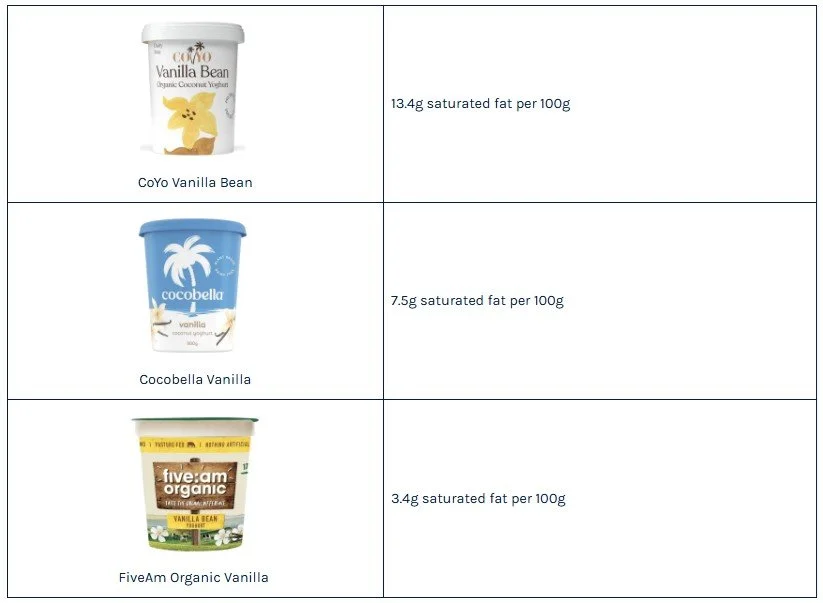
SATURATED FAT (HIGHEST)
Which yoghurts are the highest in saturated fat? Here are the top 3 from our supermarket review…
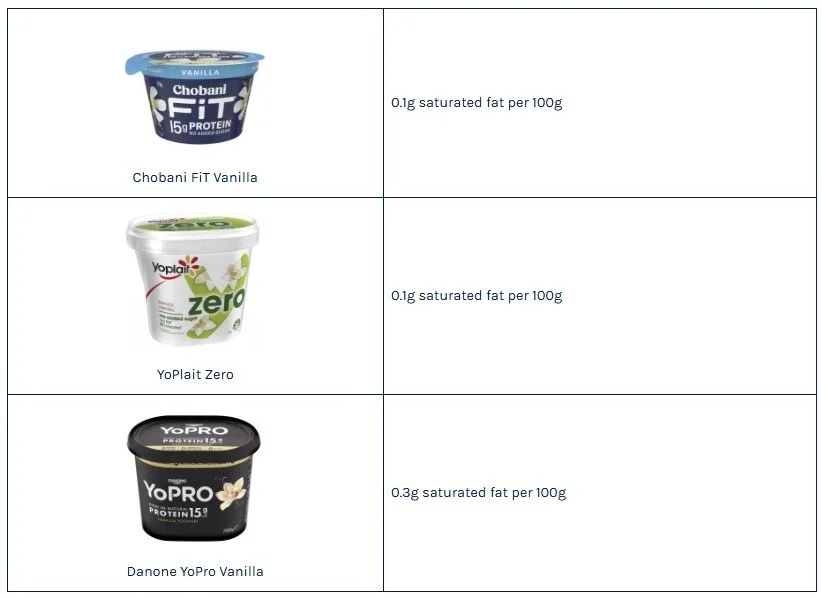
SATURATED FAT (LOWEST)
Which yoghurts are the lowest in saturated fat? Here are the top 3 from our supermarket review…
I’m Lactose Intolerant, Which Yoghurts Can I Eat?
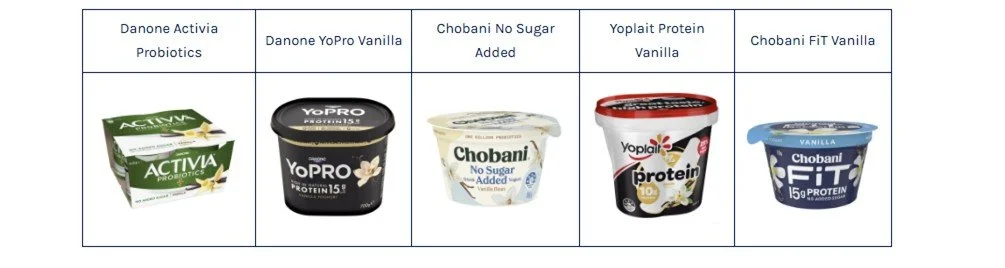
“Lactose intolerant” means your body is unable to produce the lactase enzyme to break down lactose. Lactose is the disaccharide (double sugar molecule) that naturally occurs in milk. Lactose is 2 sugar molecules (di-saccharide) attached together, specifically glucose and galactose. No human on the planet is able to absorb lactose. As humans, most of us produce the enzyme lactase that breaks apart lactose. If you can’t or don’t produce lactase you can’t break down lactose (to glucose and galactose) and lactose lower in your digestive system causes a whole heap of havoc. We are talking all those yucky symptoms of diarrhea, wind and pain. So being lactose intolerant is the same thing as having a ‘lactase deficiency’.
Increasingly dairy yoghurt (and milk) companies are adding lactase to their products (sometimes telling you, sometimes not). While coconut and soy yoghurts are naturally lactose-free (and also from above, low in calcium and protein and high in saturated fat), there are also many dairy-containing lactose-free yoghurts (which still have the same or similar calcium and protein contents). If you are lactose intolerant, you do not need to be ‘dairy free’. There are plenty of milks and yoghurts on the market that contain lactase, and are therefore lactose free. Some of them are marketed (they highlight it on their packaging), some of them aren’t. All you need to do is check the ingredients label for the enzyme lactase.. If you are confused, we get it! It’s very much like (or is) understanding chemistry at high school, and why as dietitians we hold Bachelor of Science degrees.
On a side note, you’ll notice we’ve been talking about lactose being a “sugar” molecule. So any food that doesn’t contain sugar will inherently be lactose free… P.s. Cheese, butter and cream are all very ‘low sugar’…. We’ll leave you to contemplate that!
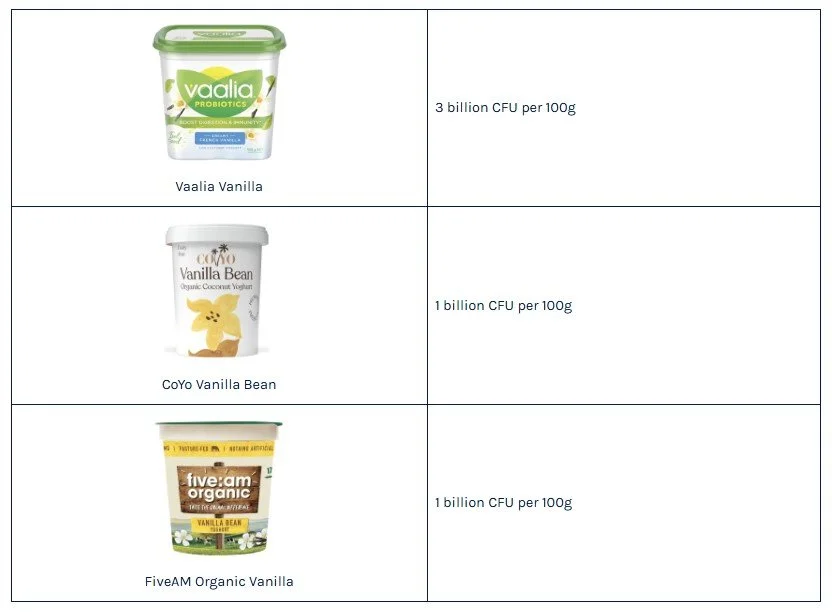
What About Probiotics In Yoghurt?
Yoghurt is a natural source of probiotics. However unfortunately we could only assess these based on the information provided on the labels. Not all yoghurts list the number of probiotics within them. In this case, Vaalia was the clear winner with the highest number of probiotics (on a label this appears as “Colony-Forming Units” (CFU). To put this into perspective, a standard probiotic tablet contains around 25 billion colony-forming units).
Ultimately, incorporating yoghurt into your diet can provide various health benefits. Choosing the right yoghurt can be overwhelming but understanding your personal goals can help. Selecting the right yoghurt can support your individual needs and contribute to a balanced and nutritious diet.
Need help?
If you’d like further help with any of this, get in contact with the team at The Eatwise Clinic. Click to book or send an enquiry.